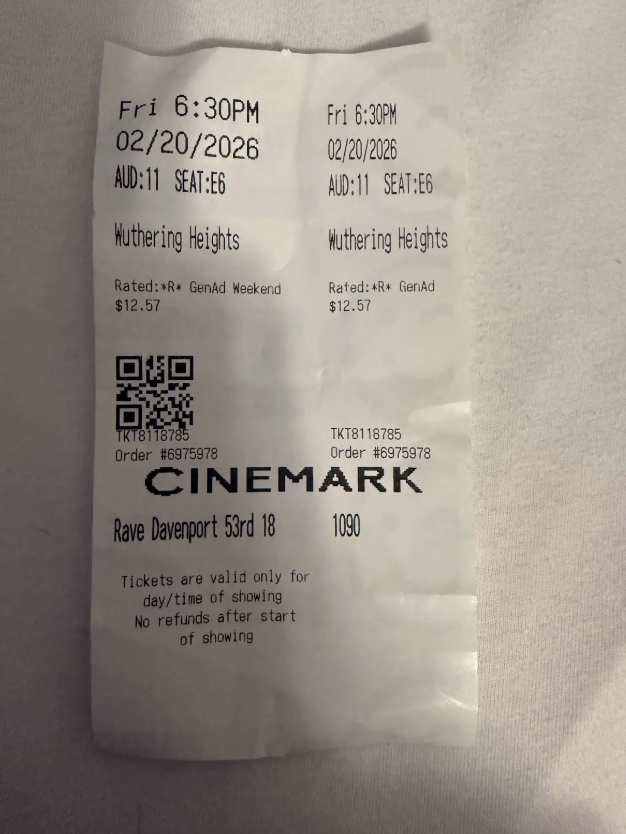
Few novels have captured the intensity of human emotion quite like Wuthering Heights by Emily Brontë. With its haunting, yet ethereal landscape, morally complex characters, and themes of love and revenge, the story has remained relevant since the book’s publication in 1847. Now, the newest film adaptation is bringing the story to modern audiences, the question arises: does the latest version stay true to the novel’s raw power, or does it reshape it for a new generation?
At its core, Wuthering Heights is a deeply layered narrative told through multiple perspectives. Multiple movie adaptations have been released, as well as multiple versions of the book, primarily through the perspectives of the narration of Lockwood and Nelly Dean, helping create distance between the central characters, particularly Heathcliff and Catherine. This allows the readers to interpret events with ambiguity, making the characters feel both sympathetic and unsettling.
The newest film adaptation, however, simplifies the structure of the novel. Instead of relying on layered narration, the movie presents events more directly, often focusing on visual storytelling and emotional immediacy. This can make it easier to follow the plot, it removes some of the mystery that defines the novel. It is meant to be read and the reader creates part of the storyline, so many things like sending letters or whispers into ears that can’t be heard are open for the reader’s interpretation. But with a movie adaptation, the audience is no longer piecing the story together, they are watching it unfold in a more straightforward way.
One of the most noticeable differences lies in character portrayal. In the novel, Heathcliff is both cruel and wounded, his character is based upon abuse and obsession. Catherine is passionate, yet selfish. Her character is torn between striving in the higher social classes but yearning takes over her mindset. Their relationship is far from romantic, the toxicity fills the writing along with intensity. The film adaptation tends to soften these edges. Heathcliff is often portrayed with more visible vulnerability, making it easier to sympathize with as his vulnerability hides his toxic traits. Similarly, Catherine’s harsher traits may be toned down, emphasizing her emotional struggle rather than her manipulation. This shift reflects modern storytelling trends, where audiences often expect characters to be more clearly likable or redeemable.
The setting also plays a crucial role in both versions. The Yorkshire moors in the novel are almost a character themselves-wild, isolating, and reflective of the characters inner turmoil. Brontë’s descriptions are vivid, but leave room for imagination. The film, on the other hand, brings these landscapes to life visually. Sweeping shots of the moors, dramatic weather, and detailed set design immerse viewers in the environment instantly. However, while the visuals are striking, they can sometimes replace the deeper symbolic meaning found in the book. What readers interpret internally, viewers are shown explicitly.
Another key difference is pacing. The novel unfolds gradually, creating a sense of yearning and limerence, and letting the consequences of each character’s actions unfold. The film must condense this timeline, often focusing more heavily on the central romance, and less on the extended family dynamics. As a result, some secondary characters and subplots may feel underdeveloped or omitted altogether.
Despite these differences, the film succeeded in making Wuthering Heights accessible to a new audience. Its emotional intensity, dramatic visuals, and streamlined narrative appeal to viewers, who may not engage with the novel’s complex structure. At the same time, longtime readers may find that something essential is lost-namely, the ambiguity and depth that make the original story so enduring.
Ultimately, neither version is definitively “Better.” Instead, they serve different purposes. The novel offers rich, immersive exploration of human nature, while the film provides a visually compelling reinterpretation. Together, they demonstrate how a classic story can evolve over time, reflecting the changing expectations of its audience while still preserving the characters within. I would recommend reading the book as it contains more information about the plot, and adds more suspense by having multiple unreliable narrators.